What to Wear This Month: Denim Outfits and Jean Care
Denim makes sense for the second half of November 2026. NOAA’s monthly outlook favors above-average temperatures across much of the CONUS and Alaska during November, except for parts of the Southwest and southern Plains. The best odds of a warm month are forecast across much of the northern tier.
A warm month will still bring rain and some cold nights. Above-average precipitation is favored across much of the West, Plains, South and Southeast, while below-average precipitation is favored across portions of the northern Rockies, Great Lakes and western Alaska. NOAA’s hazards outlook for November 13 to 19 says parts of the Middle Mississippi Valley, Ohio Valley, and Mid-Atlantic may experience near freezing overnight temperatures. Jeans can handle both, as long as you change what you wear over them.
Five Denim Outfits for November
1. Dark Jeans and a Blazer
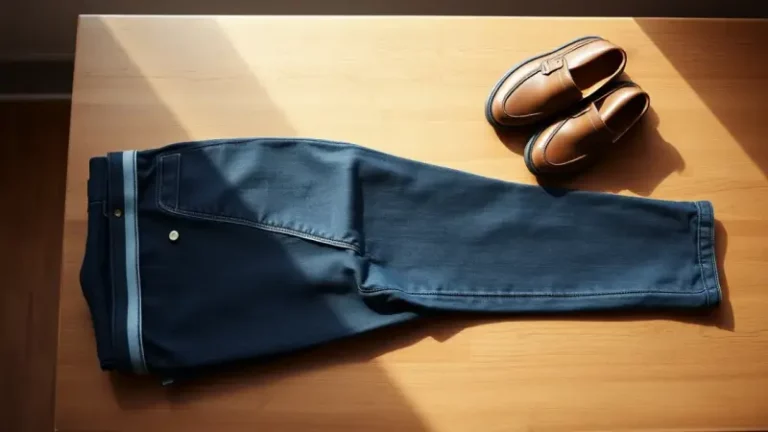
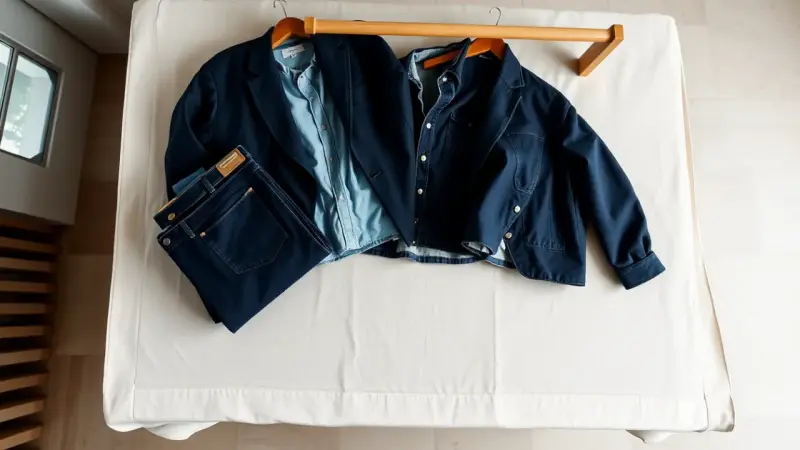
Wear dark, unfaded jeans with a plain shirt or a fine knit and a wool or tweed blazer. Add leather shoes or ankle boots and you’re set for the office or dinner out. Keep the jeans clean and creased, without rips.
2. The Denim Jacket as a Middle Layer
On mild afternoons, a denim jacket over a long-sleeve tee or a thin sweater is all you need. When the evening cools off, put a longer wool coat or a quilted vest over it. If you pair it with jeans, pick a different wash so the two pieces contrast.
3. Chambray Shirt Under a Crewneck
A chambray shirt with its collar showing above a crewneck sweater gives you denim’s look without its weight. Wear it with chinos or dark jeans and loafers or sneakers.
4. Jeans, a Rain Shell and Waterproof Boots
For the wetter regions, wear straight or slightly wide jeans over waterproof boots and add a hooded rain shell. A fleece or knit under the shell keeps you warm on cold mornings. Leave a heavy parka at home on days that warm up.
5. A Denim Skirt or Dress With Tights
A denim midi skirt or shirtdress works with opaque tights, a chunky sweater and boots. When the day warms up, drop the sweater and wear a cardigan you can take off.
How to Wash Jeans
Wash jeans less often than you might think. For most pairs, every 4 to 10 wears is enough. Spot-clean between washes when possible. Before you wash them, check the care label. Denim labels often show wash cold (30°C), do not bleach, tumble dry low, and iron low.
- Prepare them. Always turn jeans inside out before washing. Zip flies and button waistbands to prevent snagging.
- Sort by color. Wash denim with other dark clothes. Never wash jeans with whites or other light colors.
- Use cold water. Choose a gentle cycle at no more than 30°C (86°F). Hot water can cause jeans to fade (especially darker jeans) and shrink. Warm water (40°C) can be used for heavily soiled jeans when the label allows, but it will speed up fading.
- Unload promptly. Take the jeans out as soon as the cycle has ended.
- Air-dry them. Line dry in the shade to avoid sun bleaching.
Hand-Washing
Hand-washing is gentler on the fabric. A bathtub is the easiest place to do it because jeans are bulky.
- Lay the jeans flat and inside out in cold water, making sure they are fully underwater.
- Swish them around, then let them sit for 30-45 minutes.
- Drain the tub and rinse the jeans until the water runs clear.
- Roll them up and press to squeeze out the water. Don’t wring them.
Raw Denim
Raw denim needs extra care for its first wash. Soak it inside out in cold water below 20°C (68°F), laid flat so it doesn’t crumple. After this first soak, care is similar to regular jeans, but always cold and sparingly.
FAQ
– Do jeans really need to be washed inside out?
Yes. Turning them inside out helps preserve the jeans themselves by keeping the outside from rubbing against the machine agitator and other clothes in the wash. That rubbing is a major cause of fading on the visible side.
– Can jeans go in the dryer?
Only if the label allows it, and then on low heat. Air-drying is better because heat causes shrinking and fading.
– Will it stay warm all month?
Not necessarily. NOAA’s Climate Prediction Center has pointed to a possible polar vortex disruption, which could lead to a negative Arctic Oscillation, a weather pattern that can favor colder air moving into the mid-latitudes. Even so, its updated outlook still favors above-average temperatures across much of the country.
Sources
- Monitoring U.S. Temperature and Precipitation in October 2026 — ncei.noaa.gov
- How to Wash Denim & Jeans — laundrysymbols.org
- How To Wash Jeans & Denim — persillaundry.com